Chicago-Winfield Tuberculosis Sanatorium

Overview

In 1897, Jessie P. Forsythe opened a family-run rest home on the property.[1] Forsythe sold the rest home in 1908 to Charles A. Stonchill who “presented it to the Jewish public, with the provision, however, that it be dedicated solely to the care of patients with tuberculosis.”[2] The announcement of his gift was made at a joint meeting of the Baron Hirsch Women’s Club and the Jewish Consumptive Relief Society, after which the two societies joined with the Willing Works and organized and incorporated the Chicago-Winfield Tuberculosis Sanitarium.[3] The sanitarium was non-sectarian.[4]

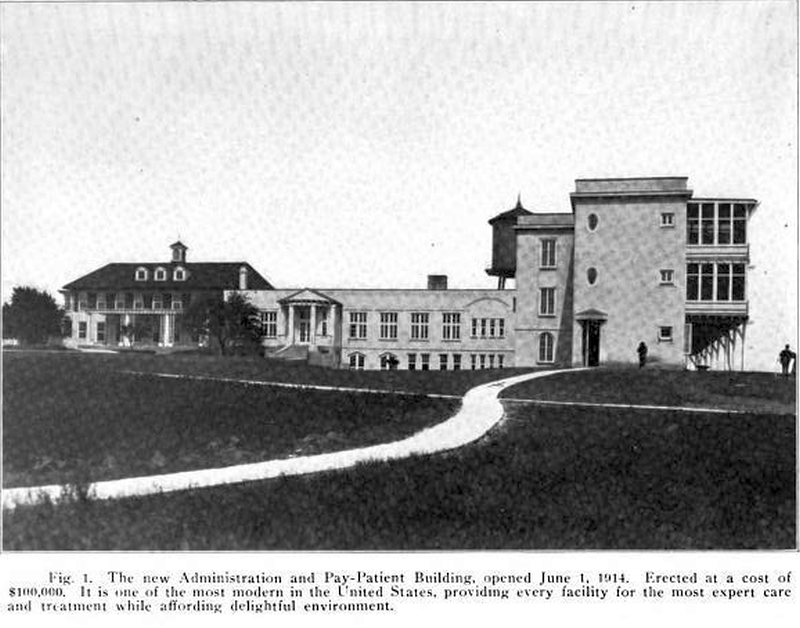
Initially, the sanitarium was a two-story frame building, however, in following decades, more land was acquired and a new sanitarium was constructed on the site.[5] By 1914, eight buildings were added to the sanitarium, including the administration building, children’s cottage, cottage for adult male patients, cottage for adult female patients, and a main building consisting of three stories and a wing for private pay patients.[6]

Patients that were able to pay were accepted, however, in 1914, “the majority of these patients are absolutely unable to pay anything, and, were it not for the generosity and humanitarianism of these broad-minded dispensers of charity, would be forced to continue to work as long as possible, until the disease was so far advanced that nothing could be done except to alleviate the suffering of the moment, until death claimed its victims.”[7]

In 1962, as more treatment for tuberculosis was being handled by places like Michael Reese Hospital in Chicago, the sanitarium closed and sold its property to citizens seeking to open a hospital in the area—that hospital became the Central DuPage Hospital.[8]

Institution Name and Type

Goal/Object

1914: “Primarily, the Chicago-Winfield Tuberculosis Sanatorium was organized for the care and treatment of patients in the curable stages of pulmonary tuberculosis, although now more advanced cases are admitted.”[9]

Type of Institution

Health : Hospital : Tuberculosis

Location and Building

Main Location

Address: 25 Winfield Rd

Locality: Winfield

County: DuPage

State: Illinois

Administration Information

Date of Founding

1909

Date of Total Closure

1962

Administration

1909: Private

1909: run by three societies—the Baron Hirsch Woman’s Club, the Jewish Consumption Relief Society, and the Willing Workers.[10]

Funding/Support

1914: support of the Associated Jewish Charities of Chicago and assistance of individual subscriptions[11]

Notable People

Administration

Dr. J. L. Anderson, Medical Director in 1914.[12]

Dr. J. C. Friedman, chairman of the advisory board in 1914.[13]

Flora M. Glenn, Chief Nurse prior to 1912.[14]

Dr. S. B. Hirshberg, Resident Physician and Superintendent.[15]

Dr. Theodore B. Sachs, Physician in Chief in 1911.[16]

Past Residents

Intake Information and Requirements

Intake Gender/Sex

Female, Male

Intake Age

All ages

Intake Specifics

1911: for incipient cases only[17]

Number of Residents

1911: capacity of 68 patients.[18]

1914: approximately 400 patients were cared for in the sanitarium each year with an average satay of three months.[19]

Records

It is unknown if there are surviving records relating to this hospital. It is recommended to contact the local historical societies and the charities that ran the institution.

Census Records

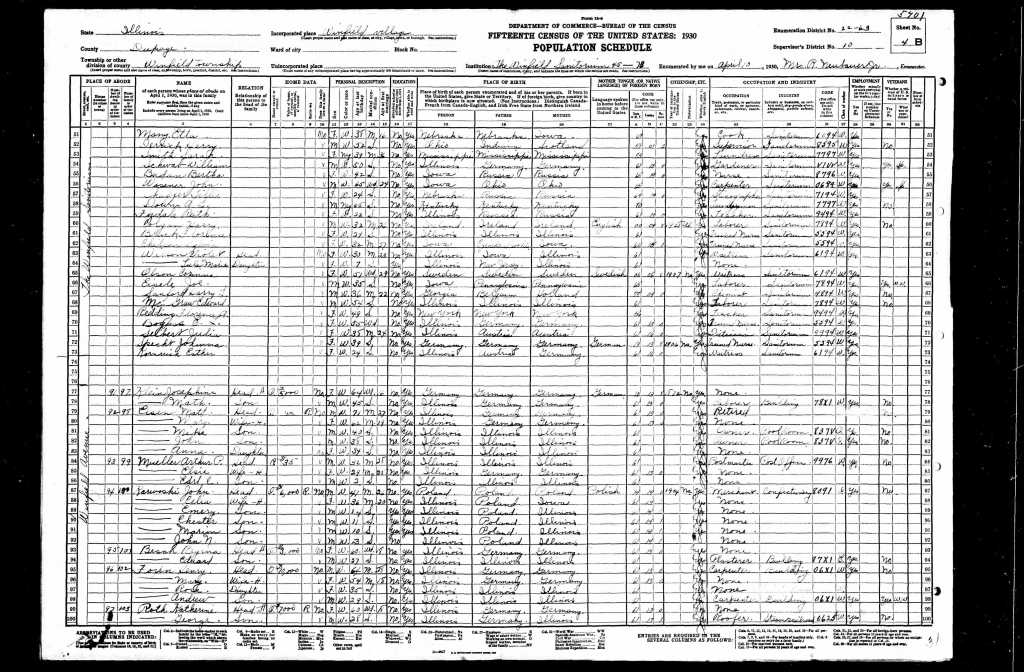
1930 U.S. Federal Census

1940 U.S. Federal Census

Sources

“Chicago-Winfield Tuberculosis Sanatorium.” 1914. The Chicago Medical Recorder 36(January-December 1914): 352-355.

Jacobs, Philip P. 1911. A Tuberculosis Directory. New York: The National Association for the Study and Prevention of Tuberculosis.

McCormac, Alice H. 1912. “School Nursing and School Work of the Visiting Nurses of Hartford, Conn.” The American Journal of Nursing 12(8): 659-663. https://www.jstor.org/stable/3404558.

“The Evolution of Winfield’s Rest Home.” 2021. Chicago Tribune. https://www.chicagotribune.com/1995/01/29/the-evolution-of-winfields-rest-home/.

“Two Hospitals, One Commitment.” n.d. Northwestern Medicine. Accessed on 25 July 2024. https://www.nm.org/about-us/history/northwestern-medicine-central-dupage-delnor-hospital-history.

Village of Winfield. n.d. “The History of Winfield, Illinois.” Winfield, Illinois: https://www.villageofwinfield.com/DocumentCenter/View/214/History-of-Winfield?bidId=.


[1] Village of Winfield. n.d. “The History of Winfield, Illinois.” Winfield, Illinois: https://www.villageofwinfield.com/DocumentCenter/View/214/History-of-Winfield?bidId=.

[2] “Chicago-Winfield Tuberculosis Sanatorium.” 1914. The Chicago Medical Recorder 36(January-December 1914): 352-355.

[3] “Chicago-Winfield Tuberculosis Sanatorium,” 1914. 352.

[4] “Chicago-Winfield Tuberculosis Sanatorium,” 1914. 352.

[5] “Two Hospitals, One Commitment.” n.d. Northwestern Medicine. Accessed on 25 July 2024. https://www.nm.org/about-us/history/northwestern-medicine-central-dupage-delnor-hospital-history.

[6] “Chicago-Winfield Tuberculosis Sanatorium,” 1914. 352.

[7] “Chicago-Winfield Tuberculosis Sanatorium,” 1914. 353.

[8] “Two Hospitals, One Commitment.” n.d. Northwestern Medicine. Accessed on 25 July 2024. https://www.nm.org/about-us/history/northwestern-medicine-central-dupage-delnor-hospital-history.

[9] “Chicago-Winfield Tuberculosis Sanatorium,” 1914. 353.

[10] “The Evolution of Winfield’s Rest Home.” 2021. Chicago Tribune. https://www.chicagotribune.com/1995/01/29/the-evolution-of-winfields-rest-home/.

[11] “Chicago-Winfield Tuberculosis Sanatorium,” 1914. 353.

[12] “Chicago-Winfield Tuberculosis Sanatorium,” 1914. 354.

[13] “Chicago-Winfield Tuberculosis Sanatorium,” 1914. 354.

[14] McCormac, Alice H. 1912. “School Nursing and School Work of the Visiting Nurses of Hartford, Conn.” The American Journal of Nursing 12(8): 662.

[15] Jacobs, 1911. 24.

[16] Jacobs, 1911. 24.

[17] Jacobs, 1911. 24.

[18] Jacobs, 1911. 24.

[19] “Chicago-Winfield Tuberculosis Sanatorium,” 1914. 353.

Bethel Home for Women and Convalescent Children

Overview

The Bethel Home for Women and Convalescent Children was founded around 1911. However, it appears to have been organized prior to 21 April 1910, as the building was enumerated in the 1910 Census.

In May 1913, The Day Book (a publication in Chicago) ran a story about the Bethel Home for Convalescent Women and Children and Mrs. Evangeline Barron, the matron and superintendent of the home. In the article, it describes how the United Charities organization refused to endorse the Bethel Home, forcing Barron to shut it down.[1]

There are few clues to the history of Bethel Home besides those in newspaper articles.

However, it is unclear as to how long Bethel Home was closed. One strange article about Mrs. Barron was published in the Chicago Tribune in 16 September 1913, “Mrs E. Barron in Wisconsin: Reports that she mysteriously disappeared prove to have been unfounded—Now at Lake Geneva,” which states, “Mrs. Evangeline Barron, former matron of Bethel home, 522 East Thirty-Fourth Place, who was reported as having disappeared in a letter sent to The Tribune, was located yesterday at Lake Geneva.”[2] This indicates that the home was either closed or Barron was no longer matron of the home sometime before 16 September 1913. Yet, just days later on 28 September 1913, the Chicago Tribune published a brief about the Calendar Club of the Bethel Home and states, “The Calendar club was organized last week at a meeting of philanthropic women at the Blackstone hotel, the society to work for the good of the Bethel Home for Convalescents, of which Mrs. Evangline Barron is head resident.”[3] It seems that the home could have been temporarily closed between May and September 1913.

Activities of Barron and Bethel Home resumed in late September 1913, as evident in newspaper articles, including the news story “School of Eugenics Planned for Bethel Home,” which describes that Mrs. Evangeline Barron was planning “to start a school of eugenics in connection with the Bethel Home for Convalescent Women and Children. Mrs. Barron is head resident of the home.”[4] Additionally, the Calendar Club, which was a society of women that raised money for the Bethel Home, was in the process of securing funding to purchase the home’s property in October 1913.[5]

In 1914, it was a certified orphanage.[6] However, there are no mentions of Bethel Home in Chicago’s Social Service Directory of 1915, or any other sources consulted after 1915.

Institution Name and Type

Alternative Names: Bethel Convalescent Home

Type of Institution: Orphanage, Sanitarium

Location and Building

Address: 522 East 33rd Place[7]

Locality: Chicago

County: Cook County

State: Illinois

Administration Information

Date of Founding: 1911[8]

Notable People

1911 Board[9]

Harry Hildreth, President

Frank W. Jones, Vice-President

H. M. Ashton, Secretary

Chas. E. Starr, Treasurer

Mrs. W. V. Barron, Superintendent and matron

Intake Information and Requirements

Intake Gender/Sex: Female, Male

Intake Age: Adults, Children

Intake Ethnicity/Race:

  • 1911: “Commitments: During the year of 1911 one colored boy was committed to their care.”[10]

Intake Specifics:

  • 1911: “Only convalescents are admitted to this institution, and no males over eight years of age. Will admit from any institution, or upon recommendation of any reputable physician, unless suffering from contagious disease. An exception was made recently in the case of a man and his wife, once wealthy, discharged from the Cook County Hospital friendless and without money. The man is now a cashier in a restaurant on a small salary, and is in the home only at night. His wife is a very capable helper about the home.”[11] 1 child was committed by the court, 18 others were received otherwise or present at the beginning of the year. 16 children were discharged with their mothers. 2 men were admitted, and 78 females were admitted.

Number of Residents:

  • 1911: 1 child was committed by the court, 18 others were received otherwise or present at the beginning of the year. 16 children were discharged with their mothers. 1 was present at the end of the year, and 2 were placed in other institutions. 70 adults were residents throughout the year. 2 men were admitted and remained until the end of the year. 78 women were admitted (10 of whom were present at the beginning of the year), 75 of which were discharged throughout the year.

Records

1911: “a fairly good record of each inmate is entered. Records are not kept in fireproof receptacle.”[12]

Unknown if records exist. No collections found through online internet searches.

1910 U. S. Census

Chicago Ward 3, Enumeration District 0221

522 East 33rd Place

NameRelation to Head of HouseholdSexRaceAgeMarital StatusOccupation
Barron, Walter A.HeadMWhite33MCan Salesman / Advertising Company
Barron, Evangelina M.WifeFWhite30MSuperintendent / Charity House
Barron, Benois F.SonMWhite6S 
Slocharick, AnnieLodgerFWhite19SHouseworker / Charity house
Slocharick, EthelLodgerFWhite0S 
Mills, Julia P.LodgerFWhite16S 
Nielsen, Julius P.LodgerMWhite23SHouseworker / Charity House
Heslen, Theresa M.LodgerFWhite25SExpediter Dipper / Candy Factory
Heslen, Josephine M.LodgerFWhite0S 

Sources

Illinois Department of Visitation of Children Placed in Family Homes. 1912. Sixth Annual Report of the Department Visitation of Children Placed in Family Homes, Board of Administration of the State of Illinois, For the Year Ending December 31, 1911. Springfield, Illinois: Illinois State Journal Co. https://www.google.com/books/edition/Report_for_of_the_Department_Visitation/e1I9AQAAMAAJ.

“Mrs. E. Barron in Wisconsin,” Chicago Tribune, 16 September 1913, p. 4, col. 1.

“School of Eugenics Planned for Bethel Home,” Chicago Tribune, 6 October 1913, p. 14, col. 5.

“Tells Curran Commission How United Charities Prosecutes Those It Does Not Like,” The Day Book (Chicago, Illinois), 16 May 1913, p. 27, col. 1-2.

“The Calendar club was…” Chicago Tribune, 28 September 1913, section 5, p. 8, col. 2.

The Institution Quarterly: An Official Organ of the Public Charity Service of Illinois. 1914. Volume V. Springfield, Illinois: State Board of Administration, State Charities Commission, and State Psychopathic Institute. https://www.google.com/books/edition/The_Institution_Quarterly/MNnKAAAAMAAJ?hl=en&gbpv=0.


[1] “Tells Curran Commission How United Charities Prosecutes Those It Does Not Like,” The Day Book (Chicago, Illinois), 16 May 1913, p. 27, col. 1-2.

[2] “Mrs. E. Barron in Wisconsin,” Chicago Tribune, 16 September 1913, p. 4, col. 1.

[3] “The Calendar club was…” Chicago Tribune, 28 September 1913, section 5, p. 8, col. 2.

[4] “School of Eugenics Planned for Bethel Home,” Chicago Tribune,6 October 1913, p. 14, col. 5.

[5] “School of Eugenics Planned for Bethel Home,” Chicago Tribune,6 October 1913, p. 14, col. 5.

[6] The Institution Quarterly: An Official Organ of the Public Charity Service of Illinois. 1914. Volume V. Springfield, Illinois: State Board of Administration, State Charities Commission, and State Psychopathic Institute. 105.

[7] Illinois Department of Visitation of Children Placed in Family Homes. 1912. Sixth Annual Report of the Department Visitation of Children Placed in Family Homes, Board of Administration of the State of Illinois, For the Year Ending December 31, 1911. Springfield, Illinois: Illinois State Journal Co. 39-40.

[8] Illinois Department of Visitation of Children Placed in Family Homes, 1912. 170-171.

[9] Illinois Department of Visitation of Children Placed in Family Homes, 1912. 170-171.

[10] Illinois Department of Visitation of Children Placed in Family Homes, 1912. 41.

[11] Illinois Department of Visitation of Children Placed in Family Homes, 1912. 40.

[12] Illinois Department of Visitation of Children Placed in Family Homes, 1912. 41.